By Michaela Lesayova
As an artist, creative health practitioner by lived experience and coach, my work sits at the intersection of ecology, creativity and wellbeing. Informed by my own health journey and recovery, I have worked across the last decade with communities, cultural organisations and creative health partners to explore how creative practice can support connection, recovery, belonging and a sense of agency. Much of my work is rooted in the natural world, whether through ongoing natural colour research, plant-based processes, community-based growing projects, sensory art practices or creative health programmes that take place outdoors.
The Green and Blue Residency, commissioned by Everybody Arts in partnership with the National Creative Health Hub at the University of Huddersfield, felt like an organic extension to my own lived experience and interests. It offered an opportunity to bring together many of the questions that have shaped my practice over the years and founding of livingwell:
What is it about relationships with land and water that supports wellbeing?
How do artists and practitioners work with place as part of Creative Health?
And what can we learn from the people already doing this work?
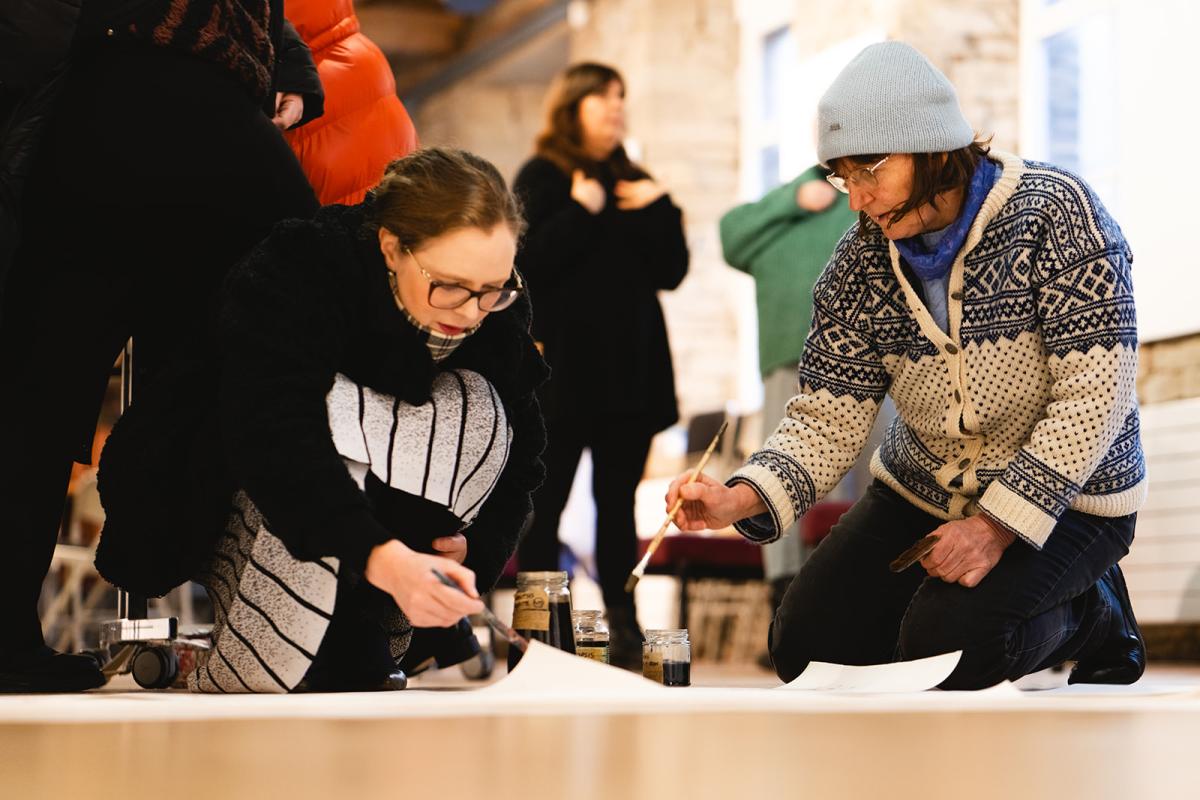
In 2024, over the course of six months, I spoke with thirteen artists, practitioners and organisations working across Yorkshire and beyond, visited nine green and blue spaces, and dedicated time to research, reflection and creative enquiry. The residency formed part of the wider Cultures of Creative Health programme and became an opportunity not only to learn from others but also to reflect on my own practice and lived experience.
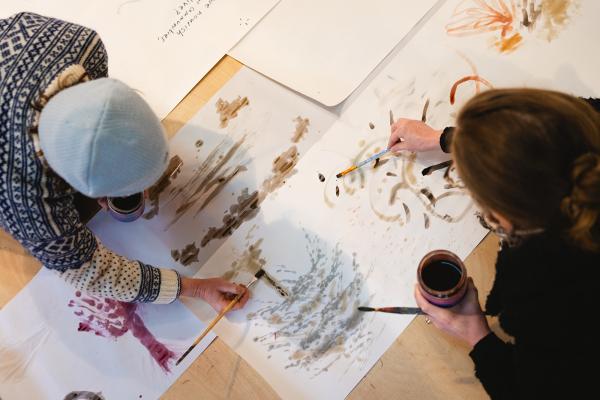
Image credit: Matt Radcliffe
My interest in this work is both professional and personal. As someone whose creative practice is deeply informed by ecology, natural materials and my Slovak heritage, I have long been interested in how relationships with landscape shape identity, memory and sense of belonging. Through my work in Creative Health, I have also witnessed the ways in which creativity and nature can support people experiencing anxiety, depression, social isolation, trauma and significant life transitions.
Projects I have co-delivered or coordinated in partnership with organisations such as S2R Support to Recovery, Bradford 2025 UK City of Culture, Orb Community Arts or Yorkshire Dales Millennium Trust have repeatedly highlighted the importance of accessible outdoor spaces, sensory experiences and creative engagement with nature. The Green and Blue residency offered an opportunity to deepen these observations and place them within a wider Creative Health context.
One of the strongest themes emerging from my conversations with other practitioners and artists was embodiment. Practitioners described how activities such as walking, growing, foraging, swimming, gardening and making create opportunities for people to reconnect with their bodies and regulate their nervous systems. These findings resonated strongly with my own trauma-informed and nervous system-informed approach to facilitation. The land offers rhythm, slowness and sensory engagement, creating conditions in which people can feel grounded, safe and present.
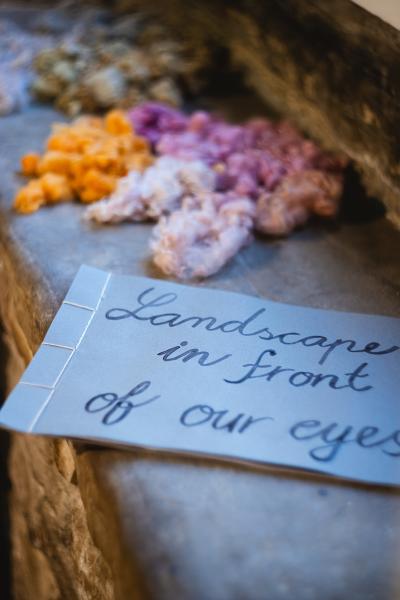
Image credit: Matt Radcliffe
Another recurring theme was the lived experience of grief. Many practitioners spoke about landscapes as places where people can process loss, remember, reflect and reconnect with aspects of themselves that may have become hidden or disconnected. As someone who had to interrogate these aspects for myself and whose practice often explores memory, belonging and personal narratives through natural materials and creative processes, I found these conversations particularly moving. The land seemed to function not simply as a setting for activity but as an active participant in processes of healing and meaning-making.
Questions of access also emerged repeatedly:
Who has access to green and blue spaces?
Who feels welcome there?
And how can creative practice create pathways for people who may otherwise experience barriers?
These conversations reinforced my belief that Creative Health is not only about individual wellbeing but also about equity, inclusion and cultural participation.
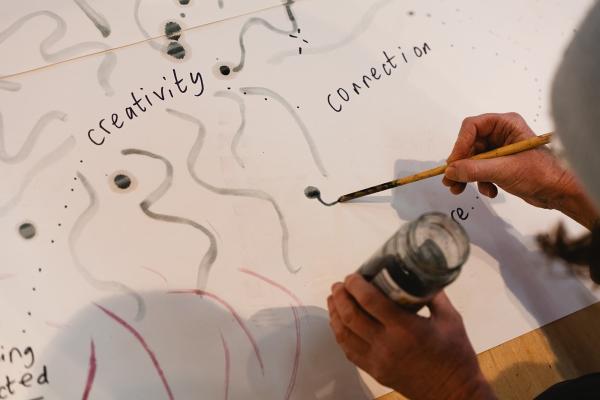
Image credit: Matt Radcliffe
The Green and Blue residency culminated in the Embracing Place event, a collaborative event bringing together artists, practitioners and community members interviewed throughout the residency to share findings, discuss challenges and imagine future possibilities for Creative Health in green and blue spaces. The event reflected something I value deeply within my work: creating opportunities for collective learning, exchange and co-creation.
Alongside the many inspiring examples of practice, the residency also highlighted significant challenges within the Creative Health sector. Many practitioners are freelancers working with limited resources, often navigating complex emotional landscapes without adequate support structures. There remains a need for greater investment in practitioner wellbeing, trauma-informed training, peer support and sustainable career pathways.
These conversations felt particularly relevant given my subsequent work supporting the Creative Health programme at Bradford 2025 UK City of Culture and my ongoing interest in workforce development. If Creative Health is to grow sustainably, we must care not only for participants and communities but also for the practitioners delivering this work.
Perhaps the most important insight from the residency is that Creative Health in green and blue spaces is fundamentally about relationships: relationships with land, with memory, with community, with culture and with ourselves. The most impactful projects were not necessarily the most complex or highly resourced ones. Rather, they were often rooted in deep listening, hyper-local knowledge and long-term commitment to place.
This experience left me with new questions, new connections and a reviewed reflection of my own lived experience of loss of health and breakdown of wellbeing. It strengthened my belief that creativity and ecology are not separate disciplines but deeply interconnected ways of understanding ourselves and the world around us.
As Creative Health continues to evolve across West Yorkshire and nationally, I hope this work contributes to a growing conversation about the value of place-based, ecological and community-centred approaches to wellbeing. The future of Creative Health will depend not only on evidence and policy, but on our collective ability to nurture relationships with people, with communities and with the places we call home.
For further details about the Embracing Place event visit the following link: www.everybodyarts.org.uk/news/embracingplace
To learn more about Michaela Lesayova's work and livingwell, you can visit the following links and social media handles: