A reflection from Barnsley, during Loneliness Awareness Week by Chetna Dobhal
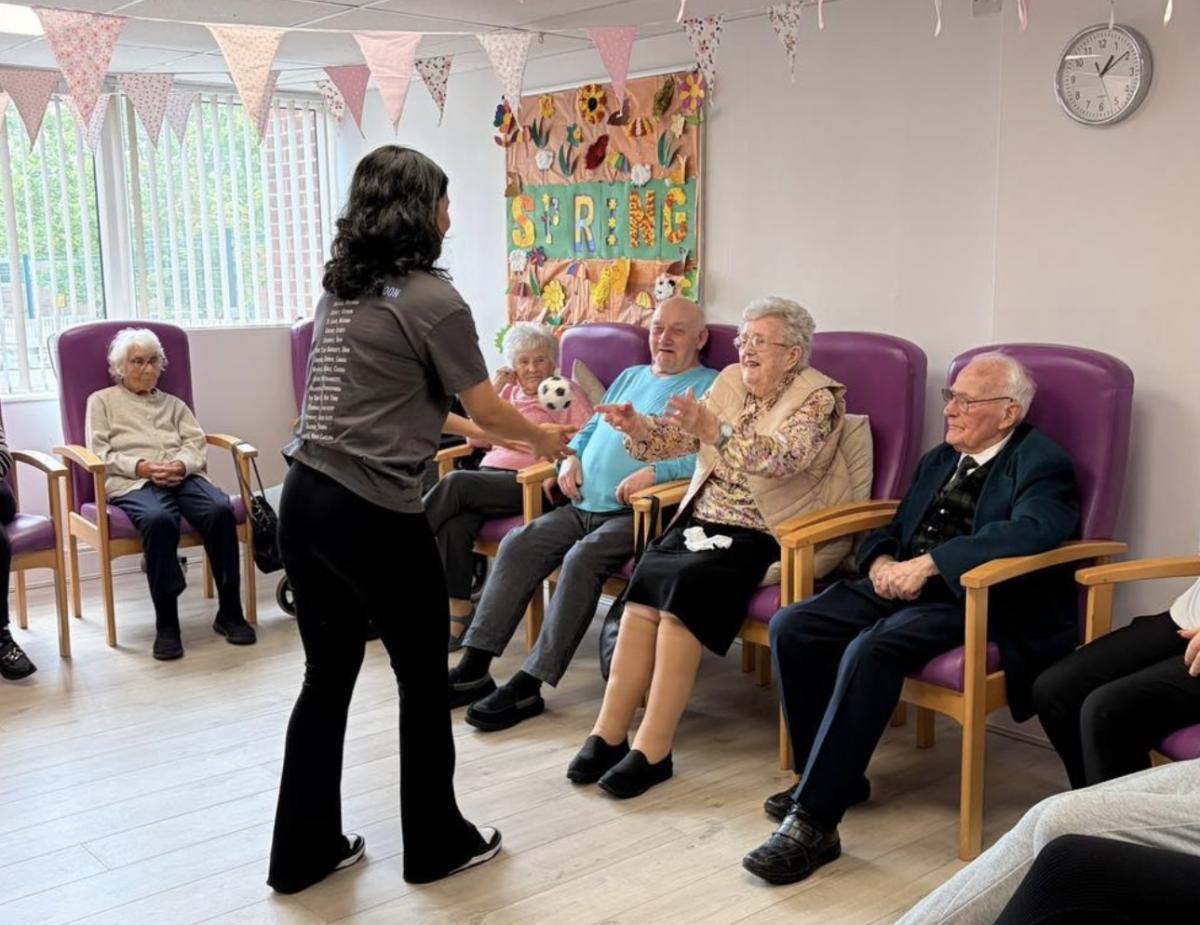
There’s a moment that happens in almost every session. It isn’t planned, and I’ve learned not to try and create it. Someone who has been sitting quietly, maybe holding back, maybe just watching, does something small. A tap of the foot. A clap that joins the group’s rhythm a beat late. A smile exchanged across the circle. It’s a small thing. But in a room of older adults who may not have had a real conversation since last week, it’s not nothing.
DanceOn is a seated movement and dance project I’ve been facilitating with older adults in community settings in Barnsley for some time now. It sits at the meeting point of two parts of my practice: my work as a dance and creative practitioner, and my training in Dance Movement Psychotherapy, a discipline that understands movement as a route into emotional and relational experience, not just physical activity.
In practice, those two things are never really separate. They’re happening at the same time, constantly informing each other. I’m holding creativity and clinical awareness together in the room, often without needing to name the difference between them.
Each session has an adaptable structure: welcome, warm-up, rhythm work, simple creative/movement tasks, social dance, and cool down. But what actually shapes the session is the people in it. Some days the room is full of laughter and noise. Other days it’s quieter, more cautious. My role is to notice that, to work with it, and not to push it somewhere else.
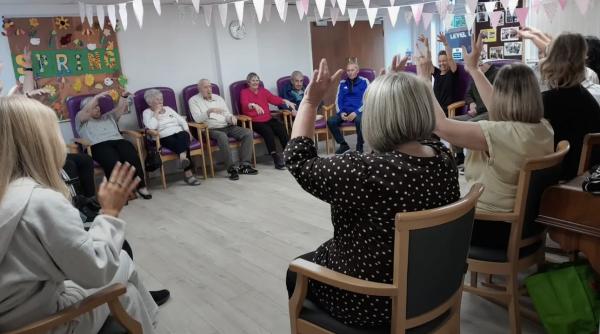
Image credit: Age UK, Barnsley
The participants I work with are living with a range of experiences: hearing loss, reduced mobility, and, more often than is spoken about directly, a steady, low-level isolation. Many are living in communities that have changed significantly over time, where familiar social spaces have gradually disappeared, and opportunities for casual connection aren’t always as available as they once were. There’s a kind of quiet resilience in that, but also a real need for spaces that simply bring people together again, without expectation or explanation.
DanceOn sessions are fully seated and fully accessible. No one has to justify how they move or how they participate. That’s not an add-on; it’s the starting point. What movement offers, and what I don’t think anything else quite replaces, is a way of being together without needing words. A shared rhythm. Someone mirroring a gesture without quite realising it. A glance that turns into a smile. These aren’t dramatic moments. They aren’t breakthroughs. They’re ordinary human exchanges. But when someone has been without those exchanges for a long time, the ordinary becomes quietly significant.
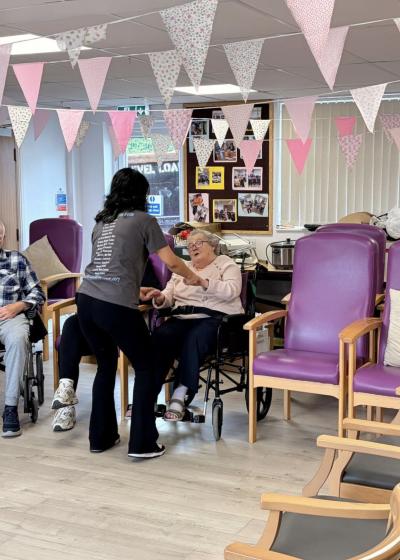
Image credit: Age UK, Barnsley
Over time, I’ve realised that simplicity goes further than complexity in this work. Repetition, rhythm, familiar patterns; they give people something steady to return to each week. The sessions aren’t about performance or achievement. They’re about presence, in whatever form that takes on a given day.
What stays with me are the small shifts across a session. Someone arrives guarded, then slowly begins to join in. The room starts to feel, almost imperceptibly, more connected than when it began. Afterwards, people often say things like, this is the best part of my week, or I always feel better after this. I don’t take those comments lightly. They’re not throwaway. They speak to something very basic: the need to feel included, to be in company that asks nothing of you, to have somewhere to go where you belong without having to earn it.
There are challenges too. Communication with people who have significant hearing loss means constantly adjusting, slowing down, demonstrating more than explaining, checking in. There’s also a balance between movement and conversation, between holding structure and letting the group shape what happens. I’m still learning how to do that better, how to let the sessions be led more by the people in the room, their humour, their comments, the small moments that quietly show you where the work wants to go next.
Loneliness Awareness Week, hosted each June by the Marmalade Trust, feels like a useful moment to name what this work sits alongside. Not because loneliness is new, but because it is still so often under-acknowledged, softened, avoided, or spoken about in general terms rather than lived experience.
What I see in these sessions is that loneliness doesn’t always present itself as sadness or distress. Sometimes it looks like someone who is perfectly fine, perfectly polite, and quietly hasn’t shared a moment of movement, laughter, or touch with another person in a long time.
DanceOn doesn’t “fix” that. It was never meant to. But it does create conditions where connection becomes possible, gently, without pressure, without forcing it into being something it’s not. And in a room where people arrived as individuals, sitting apart, those small shifts towards something shared feel worth noticing. They’re not loud. But they matter.
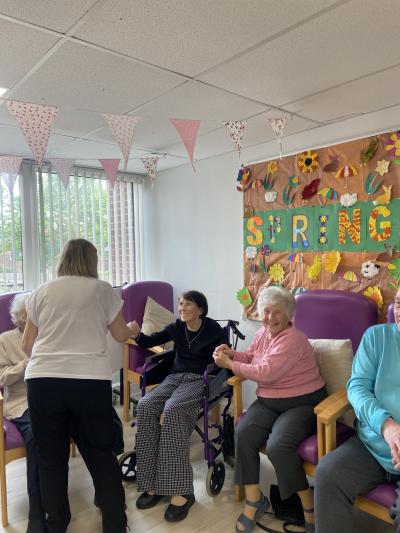
Image credit: Chetna Dobhal
About the author
Chetna is a dance and creative practitioner and a registered Dance Movement Psychotherapist, working across community and clinical spaces. Her practice is shaped by an interest in how movement, rhythm, and relational presence can support emotional connection and wellbeing.
She is based in the UK and works with older adults in community settings, alongside her clinical work with young people. Her work sits at the intersection of creative practice and therapeutic thinking, with a focus on accessibility, dignity, and the small human moments that emerge when people move together.
To learn more about Chetna Dobhal’s work, you can visit the following link:
https://linktr.ee/chetnadobhal
Loneliness Awareness Week runs from 15-21 June.