A guest blog for Creativity & Wellbeing Week by Fatima Lahham
In January of this year, I started facilitating a singing group at the UK charity Women for Refugee Women. We met every week for 90 minutes, and by March the group had become a choir, with their first original song recorded. By May, as I write, the choir has a name that was chosen by the group members: Voices of Hope.
This short piece is intended to reflect on some of the processes of facilitating the group from week to week, what happens in our sessions, and the role of communal singing in creating spaces for care, creativity, and critical hope. Hope that holds the instant joy and connection we get when we sing together, as well as the realities of many people’s experiences coming to the UK to seek safety and navigating the hostile and unjust immigration system.
When women arrive to the UK seeking safety, they are disbelieved by default, heartlessly detained at random, forced into poverty and are often left to ‘live’ in atrocious accommodation. Applications for refugee status can take years in the UK as a result of a system that has been purposefully built to break people. This isn’t just wrong, it’s shameful. That’s why we work alongside women seeking safety in the UK to campaign for a compassionate and fair asylum system. (Women for Refugee Women website [accessed 12/05/2026])
This short piece shares descriptions of and my reflections on what happens in our sessions, alongside song lyrics written by the choir members.
One love, keep us together
We start and end our sessions by standing in a circle and singing ‘one love, keep us together. We are, voices of hope.’ How we came to sing this, was through conflict. After the conflict, we decided to create a new space, and a new way of being in space, through a new song. A new song = a new space.
As soon as one person starts singing this song, we are in a circle. We are together. We lock into the new space. We are Voices of Hope, says one member.
This practice creates a space that allows us to be present in the moment, alert to future songs and creativities, and also reminds us of the previous conflict that caused us to create the song. Conflict is transformative, because it invites us into a space where we can change.
Everybody loves music
I asked the choir to do an exercise today in pairs. I asked them to ask each other a question and reply, in song. Then we went around hearing the questions and responses.
This excerpt from my diary describes how the choir’s song, ‘Wellbeing’ was made. When we came to decide on a title, there were a few suggestions such as ‘Love song’, but finally everyone decided on ‘Wellbeing’ – because it’s how we ask each other, how are you? Are you well?
Half the circle sings a question, and the other half reply. Then, we switch roles so that everyone has asked and been asked:
How are you today? We are good, thank you.
How was your journey here? It was fantastic.
Do you like music? Yes, we love music.
The other half of the song builds on ‘we love music’. Around a refrain of ‘everybody love music, everybody love music’, we sing ‘hey lelele’ (a suggestion after the Kurdish singer Rojda’s Hey Lê Lê). When we were composing the song, one member spontaneously started singing: ‘music is our joy, music gives us hope, music reduce stress, music calm us down’ – so these became the middle verses of the song.
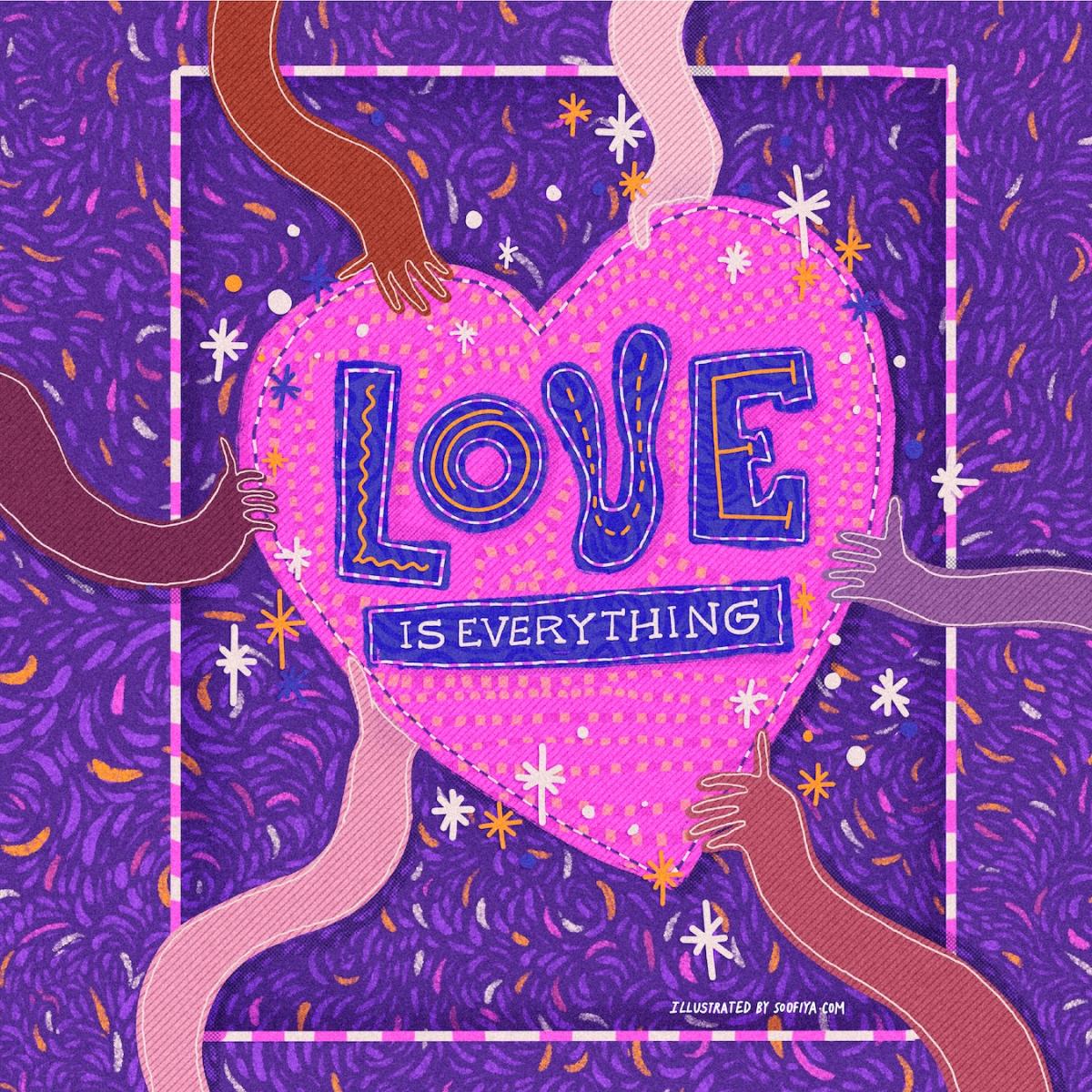
Love is Everything
The song we have recorded with a release date of May 13 for the Million Acts of Hope campaign is called ‘Love is Everything’. This is the first song ever written by the group, and holds very special stories and routes of how it came to be. Even singing it 5 months later, one of the choir members became emotional – ‘I remember it, but even so’ – she gestured to her heart.
The first part of the song speaks about the importance of solidarity, joy as a way to stand together, and the power of unity:
Don’t give up,
Support each other,
Unity and listen.
Be strong for each other,
Be strong and joyful for each other.
Love is everything,
Trust, hope and kindness.
One week, as we were singing this part of the song, one of the members modulated up and started singing, ‘all we need is love’. This turned into the second part of the song:
All we need is love, all we need is kindness.
All we need is love to make our dreams come true.
All we need is love, all we need is kindness,
All we need is love to make a change.
In the words of the members: This is our song. These are our voices.
When we were looking for a name for the choir, we had many different suggestions from the members. The list they came up with is a poem in its own right:
Strong women
Dance choir
Togetherness
Free spirit choir
Peace choir
We rise as one
One voice, one love
Women
Resilience
Voices of hope.
Love is Everything by Voices of Hope: https://www.youtube.com/watch?v=Z6AFJg9PoGM
Women for Refugee Women Website: https://www.refugeewomen.co.uk/
Follow Women for Refugee Women on Instagram: www.instagram.com/4refugeewomen
About me
My name is Fatima Lahham and I am a Hallsworth Fellow in Geography at the University of Manchester. My work as a musician and researcher draws on creative methods to explore music and sound making practices and healing justice. It has been a huge privilege to work with the wonderful members of the choir Voices of Hope, the choir I facilitate at Women for Refugee Women.
I was born in Oxford, in the UK. The migration routes that brought me to the UK include my father’s journey from Beirut to Oxford during the Lebanese civil war, and my maternal grandmother’s journey from Panama to Buckinghamshire via New York. One of the things that helps me to make sense of the journeys that have put me where I am is singing: whether that’s dhikr, Fairouz songs, or a Mexican lullaby passed from my great grandmother to my grandmother to my mother.
In my current project at Manchester, I am dedicated to music and sound making as tools for togetherness, healing, and radical imagination. I work in partnership with community organisations to research what musical and sonic practices help people to stay well. Learn more by visiting my website: www.fatimalahham.com or follow me on Instagram: www.instagram.com/fictionalfatima