Antigone – for International Migrants Day – is not your typical staging of a Greek tragedy — it is a powerful act of collective storytelling and political resistance rooted in lived experience rather than classical theatre conventions.
Watching Antigone at St. Margaret’s House on 16 December 2025, I was struck by how deeply this work understands lived experience and performance – neither too literal nor too abstract a representation, but an inspired and courageous truth-telling – challenging power. The performers as the primary site of storytelling, resistance, care, and survival. This is a performance that does not ask us to observe suffering from a distance; it asks us to recognise how systems of power live in and act, and always have.
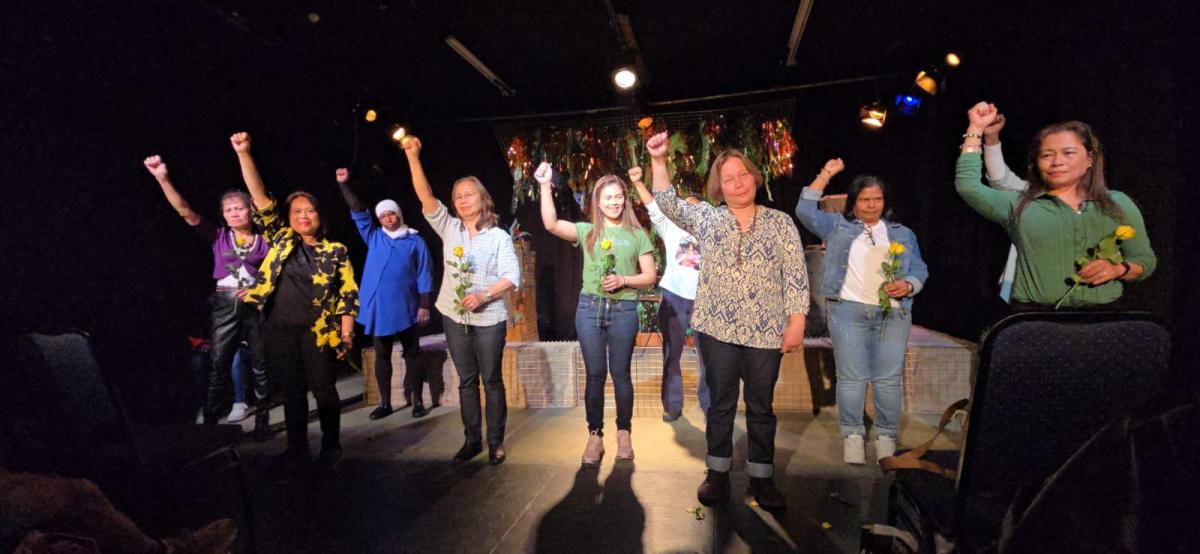
The drama project is led by Cheryl Gallagher and Drashti Shah, and the latest performance - an adaptation of the Greek play, Antigone - was the third show that they have developed. Performed by members of Waling Waling, a union of migrant domestic workers, this re-imagining of Antigone was a reclamation of voice and stating truth to power. Antigone’s refusal to obey unjust law resonates powerfully here — not as tragedy, but as a living practice of courage, solidarity, and self-determination. The performers are not just playing characters representing struggle; their lives are shaped by borders, visas, and labour systems that extract care while denying dignity.
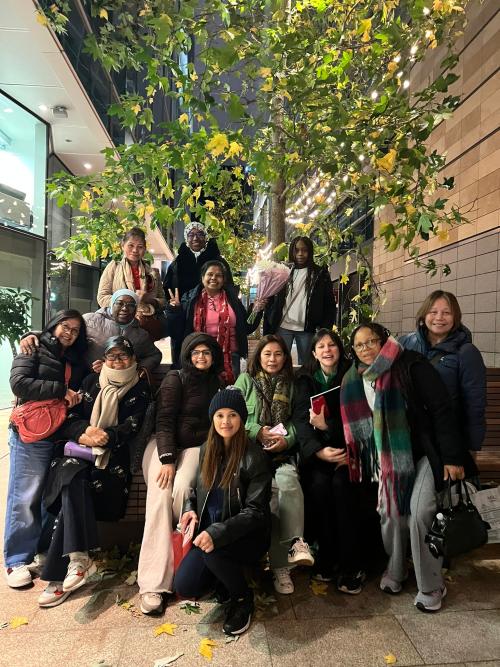
Image credit: Drashti Shah
What moved me most was the collective presence of the performers. There is a quiet strength in how space is occupied — in their voices, their gestures, their performances. As someone who works with movement as a tool for healing and empowerment, I could sense how this performance functioned as a kind of embodied reclaiming: of narrative, of agency, of the right to take up space. Their campaign for their rights, their identity and work is not passive; it is central, political, and alive.
The event’s structure — moving from performance to shared food and conversation — reinforced this sense of care as something communal rather than individual. It echoed a core belief of Move to Thrive: that healing and change happen in relationships, not isolation. Sitting together, listening, and reflecting felt like an extension of the performance itself — a reminder that witnessing must lead to connection and responsibility.
Antigone – International Migrants Day was not designed as a theatre experience in conventional sense, and that is precisely its strength. It opened the stage and soon after the performance, broke the spectacle into a conversation. It asks us to confront how migration policies and labour hierarchies shape who are protected and who are made expendable — and it does so with clarity, compassion, and a quiet force.
I left feeling grounded, challenged, and deeply grateful for the space that was created. This is work that reminds us that theatre can be a powerful way to challenge dominant societal narratives— and to witness the strength of silenced truths.
About the Reviewer
Aditi Kaushiva is a leading Creative Health Facilitator, movement artist, and founder of Move to Thrive — a wellbeing platform rooted in mindful movement, community care, and cultural connection. She has worked with organisations across the UK including The Bridge, London LGBTQ+ Community Centre, Google Cloud Startup Hub, Creative Mornings, Theatre Deli, and 64 Million Artists, and has contributed to wellbeing festivals such as Wellnergy, Soulful Wellness, and Creativity and Wellbeing Week. Aditi is regularly invited to audit creative health projects and review performances and showcases, offering an expert perspective on community engagement, embodied practice, and the role of the arts in wellbeing.