
I trained in medical physiology at the University of Westminster (2002–2006), then worked on NHS clinical studies. One lesson stayed: the body keeps a record of what it goes through. Stress lives in the nervous system. So does safety.
Years in studios showed me my communities had always built safety for each other; they just never called it health care.
This month’s theme is Honouring our Communities. For me, that means naming the people who held Black London together through sound, and asking what we owe them.
Edward Woods, 1990s–mid 2000s
An important stage of my practice began not in a studio but on Edward Woods Estate in west London, where I spent my teenage years: part learning artist management, part what I didn’t yet know was community outreach and youth work.
In the summer of 2006 I was building a wave with Hoodstars, a grime collective from west and south London. A dysfunctional family at the best of times. The music was anything but. They were raw, brilliant, chaotic, exceptionally talented and musically unpredictable.
No label, no budget, just “big back computers” and a belief our music deserved hearing. Young men from the estate who needed a place to be. And it was in the estate’s community centre that I hosted a session where we built our first online artist profiles; for many of us, me included, it was our first music upload. MySpace was holding up the industry for unsigned artists.
Much else happened in a bedroom studio at my auntie’s house. God bless Auntie JC, who put up with all of us. Dot Rotten, who became one of grime’s most gifted all-rounders, was in that room; he passed away this year. Warewolf, Mega12, Nights, King, Ice Kid and Bleepa were there too.
Auntie JC didn’t work in music or health. She opened her home, fed whoever was there, and gave young men somewhere safe to be loud. That is care work, and exactly what this month asks us to honour.
A home away from home
From 2017 a Hammersmith flat’s kitchen became On Da Beat’s epicentre. We moved through Park Royal (shout out James), Church Row in Wandsworth Town and a short stint at Pop Brixton that didn’t work out, settling in 2023 at Devas Club, Battersea, while holding space at Somerset House.
Catalysts included the platinum record “Man’s Not Hot” and the producers and engineers who passed through and went on to shape UK Black music.
Every room was held up by someone: a youth worker who wouldn’t lock up on time; a building owner who let the rent slide for a month; an older producer who answered the phone at midnight; a studio manager who helped build the soundproofing; an up-and-coming engineer who practised wiring up a studio.
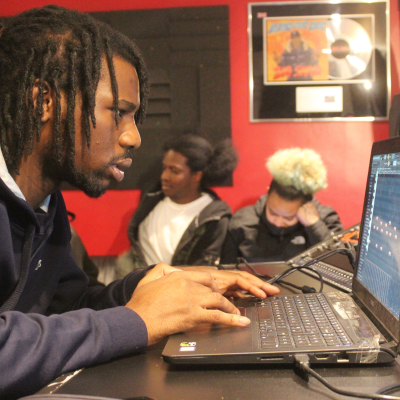
An archive photo from Park Royal c.2018
Devas Club has its own history of this: the youth club where So Solid Crew’s story began, where Rodney P was present and where Che Lingo recalls spending time. Our Wandsworth Borough of Culture documentary, Bloodlines & Basslines, grew out of that.
Wandsworth’s legacy stretches back to Evelyn Dove of Barnard Road, Battersea, the first woman of African heritage on BBC radio. It runs through people who grew up in sound systems, like Zakeyah; pirate radio pioneers like Mr C and DanDaMan; the youth clubs; and today’s Wandsworth producers, like Shomekeh Gould and Marz Beatz. Contributors repeatedly describe the same thing: a room where they were taken seriously.
The music matters. But the infrastructure around it kept people well: the room, the engineer, the bus fare home, the mentor who answered the phone.
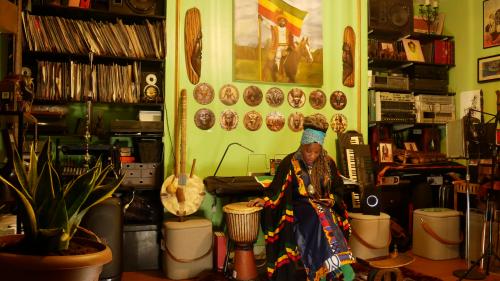
Documentary still — Zakeyah - Sound System Pioneer, Youth Worker, Activist
The engineer, producer and beatmaker as therapist
A good engineer does more than set levels. They read the person in front of them, know when to push for another take and when to put the kettle on, and let someone say on a track what they can’t yet say out loud. I’ve been blessed to watch this for almost twenty years. The best creatives I’ve trained, and trained with, were never just technicians. They were holding space.
That inspired our “Music Is the Medicine” event, now growing into a creative health programme. Adults and young people referred through mental health, housing and social care services come for one-to-one and group studio sessions. It isn’t music therapy, a protected profession; we work alongside therapists, not in their place. What we offer is older and simpler: a room, a creative person who listens, and the dignity of making something that’s yours.
It reunites my two disciplines. Physiology told me what stress does to a body. Studios showed me what a safe room does for one.
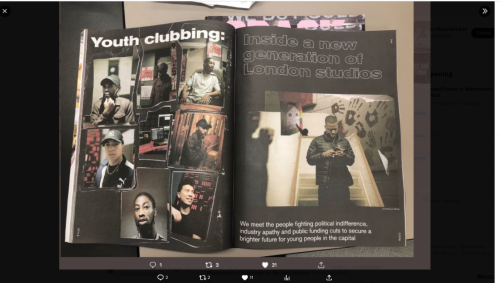
Youth Clubbing — Article from Crack Magazine
Sankofa
I was born in Accra. Though long disconnected from Ghana, I never stopped calling it home, and lately I’ve been back in studios there. Shout out Stel Studios, Prime House Studios and Hiphop Africa.
Those rooms carry the energy of Edward Woods in 2006 and the 2017 kitchen: young people, sometimes with more ideas than equipment, building their own infrastructure because nobody else will. Each return home feels like a rebirth.
The Akan symbol Sankofa, a bird looking back over its shoulder, means go back and fetch what you left behind. For many in the diaspora, honouring our communities means honouring both ends of the journey: the London estates and youth clubs that raised us, and the places our families came from.
The rooms are different. The care is the same.
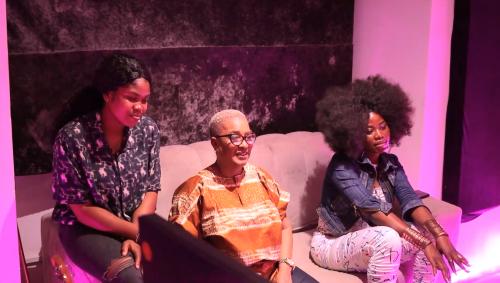
A session in an Accra studio
Honouring means building
Honouring the people who held our communities together should mean building what they never had: fair pay, training, referral pathways and institutions that outlast a single funding round. Many did this work unpaid. Many rooms closed when the money moved on.
Creative health has a real opportunity, but can still feel like something done to Black communities rather than by them. The practitioners were already here, on the estates, in youth clubs and in aunties’ front rooms. The job now: recognise them, resource them, let them lead.
Tracks recorded at Devas | Explicit Lyrics | Parental Advisory | NSFW]
A thank you
To Auntie JC, who opened her home. To Dot, rest in power; your influence lives on. To Hoodstars, everyone who has been pat of On Da Beat, The Brigade Network, and everyone who passed through those rooms. To The Motherland Family in Accra, who welcomed me home; can’t wait to see you again. To the youth workers who stay late, and the engineers who treated a first session like it mattered.
You were doing care work before anyone named it. This month, we name it. Then we build on it and own it. Music is the medicine.
To find out more about Anthony Larbi's work, visit his LinkedIn page here