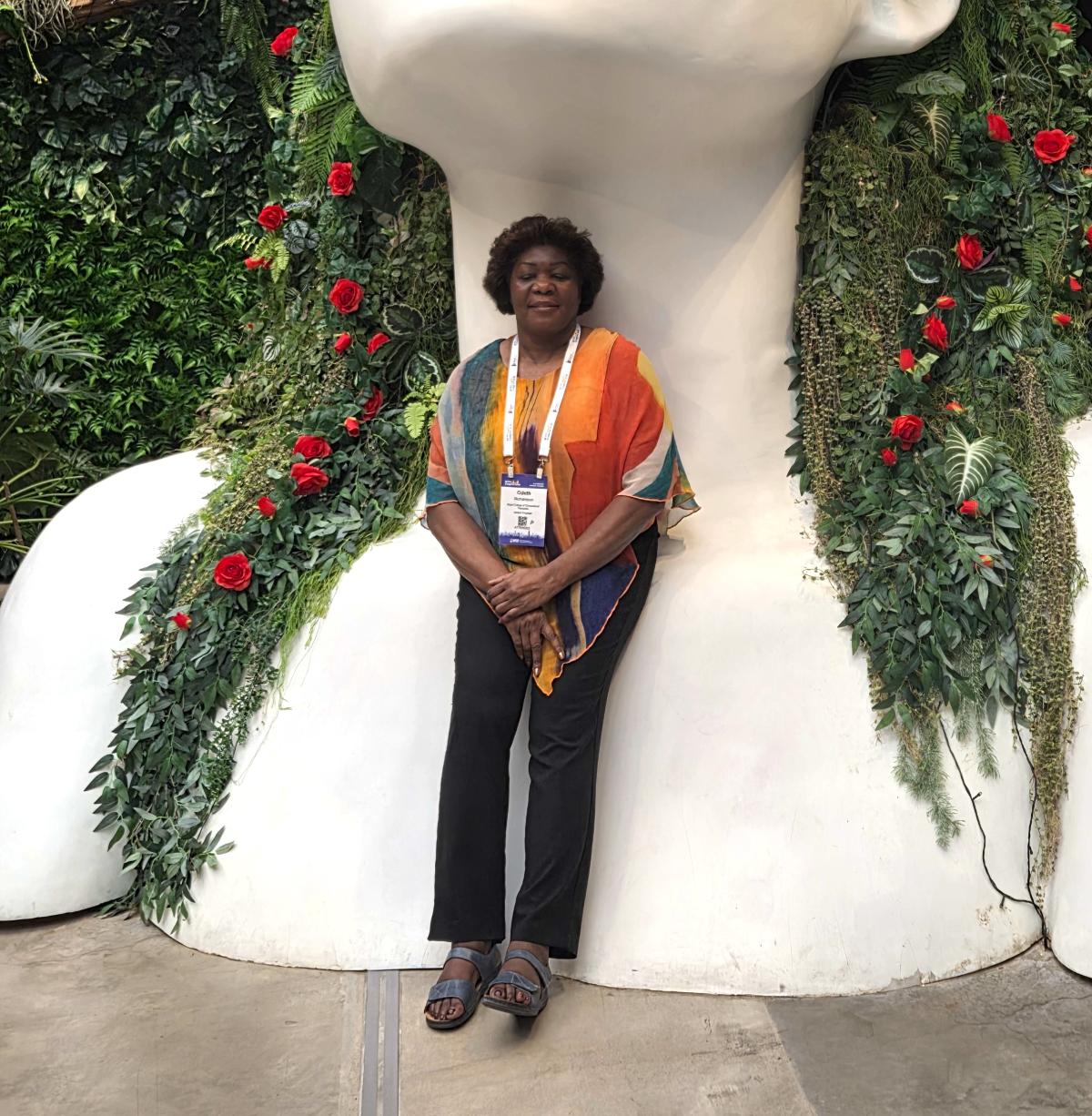
Odeth Richardson is a panelist at the Common Ground Conference 2026 exploring 'What are the edges of creative health?' on 7 October.
What have you been doing today?
Today began with an early morning catch-up with the CEO of the Royal College of Occupational Therapists as part of our regular one-to-one conversations. From there, I joined fellow therapy leaders to review our therapy service strategy and ensure it aligns with our Trust's newly launched strategic priorities.
The afternoon was a mixture of meetings, responding to emails, and planning for the rest of the week. I also met with our Trust's Arts Programme Manager to discuss contributions to this year's Black History Month programme, exploring how creativity and cultural expression can support wellbeing and inclusion.
Is this a typical day for you? Perhaps tell us how your day can vary across your practice.
No two days are ever quite the same, and that is one of the things I enjoy most about my work.
While many days involve meetings, strategic planning, and supporting staff and services, I can just as easily find myself contributing to national discussions about occupational therapy, working with community organisations, supporting charitable initiatives, mentoring colleagues, or preparing talks and presentations.
Outside of work, I am involved with a number of charities and community organisations, and I also spend time writing. Writing has become an important creative outlet for me, helping me reflect on life experiences, leadership, culture, identity, and wellbeing. The variety keeps me grounded and continually learning.
How have you made space for your own wellbeing today?
The weather was unusually warm, so I made sure to step away from my desk and take a short walk outside during lunch. Even a brief change of environment can make a difference. I also gave myself permission not to write today. Writing is an important part of my wellbeing, but I have learned that creativity cannot always be forced. Sometimes wellbeing means recognising what you need in the moment and allowing yourself the space to return to creative pursuits when the time feels right.
When and how did you start working with culture, health and wellbeing? How does this compare to today?
As an Occupational Therapist, culture, health and wellbeing have always been interconnected in my work, although I may not have described it in those terms when I first started my career.
Occupational therapy is fundamentally about helping people participate in the activities that give their lives meaning and purpose. We refer to these activities as occupations, and they can include anything from self-care and work to leisure, creativity, family life, and community participation.
Over the years, I have become increasingly aware that creativity is a profoundly important occupation. Creative activities enable people to express experiences that may be difficult to put into words, reconnect with a sense of identity, build confidence, and imagine new possibilities following illness, loss, or significant life change.
Whilst my current role is primarily strategic and leadership-focused, the principles remain the same. Whether supporting patients, staff, communities, or organisations, the aim is to create the conditions in which people can flourish and experience a sense of purpose, belonging, and wellbeing.
What was the last project you came across that inspired you and how?
Last weekend, I attended the launch of a community storytelling project supported by Theatre Royal Newcastle that focused on the West End of Newcastle, where I live.
What inspired me most was how the project brought together art, storytelling, history, and community voices. The launch event combined music, visual art, and personal stories in a way that celebrated both the diversity and resilience of local communities.
The project produced four books, each exploring a different aspect of life in the West End, from community gardens and environmental projects to local history, belonging, children's perspectives, and personal memories. It was a powerful reminder that culture is not simply something we consume. It is something we create together through our stories, relationships, and shared experiences.
As an Occupational Therapist, writer, and community advocate, I was struck by how creativity can strengthen connections between people and places while supporting both individual and collective wellbeing.
Odeth Richardson is an Occupational Therapist, healthcare leader, writer, and community advocate based in Newcastle upon Tyne. She is Head of Therapies at The Newcastle upon Tyne Hospitals NHS Foundation Trust and has held a range of national leadership roles, including serving as Chair of the Royal College of Occupational Therapists.
Throughout her career, she has championed the role of meaningful occupation, creativity, inclusion, and community connection in supporting health and wellbeing. Alongside her professional work, she actively supports several charitable and voluntary organisations and is passionate about creating opportunities for people and communities to thrive.
Odeth is currently writing a memoir, Thunder and Grace, reflecting on family, migration, identity, leadership, loss, resilience, and the experiences that have shaped her life and career. She is also a regular speaker on leadership, occupational therapy, equity, and wellbeing.